
Key Takeaways
- High Mineral Content: St. Louis groundwater carries heavy amounts of calcium and magnesium, creating chalky white film, stubborn soap scum, and scale buildup on home fixtures.
- Chemical Inefficiency: Traditional synthetic detergents struggle to lather in hard water, often leading homeowners to overuse harsh chemicals that create excess plastic waste and toxic runoff.
- Natural Acid Solutions: Organic acids like citric acid and vinegar act as natural chelating agents, safely bonding to mineral deposits and dissolving them without damaging plumbing or home surfaces.
- Surface Protection: Consistent green maintenance prevents long-term mineral etching on glass shower doors and chrome fixtures, lowering stress on home appliances.
Living in the Greater St. Louis area comes with distinct seasonal shifts, historic architecture, and one persistent household nuisance: stubborn mineral buildup. Local water flows through mineral-rich soil and riverbeds, picking up heavy deposits of dissolved calcium and magnesium along the way. When this water dries on your shower glass, faucets, or tile, it leaves behind a chalky white film and heavy soap scum that standard cleaners often fail to address. Homes utilizing dedicated house cleaning in St. Louis, MO often discover that tackling these chalky deposits requires more than just scrubbing—it takes a targeted, eco-friendly approach that breaks down minerals without harming your indoor air or local waterways.
Understanding St. Louis’s Hard Water Problem
Hard water is defined by its concentration of dissolved minerals, primarily calcium carbonate and magnesium. As water moves through regional rock formations across Missouri, it collects these elements in high quantities. While safe to drink, these dissolved minerals cause continuous friction inside residential plumbing and on visible home surfaces.
When hard water leaves a faucet, showerhead, or dishwasher spray arm, the water eventually evaporates, but the minerals stay behind. Over time, this leads to three primary headaches for homeowners:
- Chalky Scale Buildup: White, crusty deposits around faucet aerators, drains, and showerheads that slowly restrict water flow.
- Persistent Soap Scum: Calcium bonds with traditional soap molecules, forming an insoluble curd that sticks to bathtub walls and glass doors.
- Etched Glass and Fixtures: Accumulations left untreated can gradually etch glass surfaces and dull polished finishes permanently.
Beyond aesthetic issues, mineral scale inside water heaters and appliances forces those systems to work harder, increasing energy consumption and causing premature wear on heating elements.
| Surface Area | Hard Water Symptom | Environmental Risk of Harsh Cleaners | Eco-Friendly Alternative |
| Glass Shower Doors | Spotting, cloudy film, mineral etching | Fumes from synthetic sprays irritate lungs | Citric acid or diluted white vinegar spray |
| Chrome Faucets & Drains | Crusty white scale at base and aerator | Strong bleach damages metal plating and pipes | Lemon juice focus treatment with soft microfiber |
| Tile & Grout Lines | Sticky soap scum, dull grout haze | Chemical runoff enters local storm drains | Plant-based chelating formulas & gentle agitation |
| Dishwashers & Appliances | White haze on glassware, scaled elements | Corrosive descalers wear internal gaskets | Vinegar wash cycles & concentrated bio-based cleaners |
The Problem with Synthetic Cleaners in Hard Water
When faced with thick mineral deposits, the immediate temptation is often to reach for heavy-duty industrial chemicals, bleach, or concentrated synthetic detergents. However, hard water creates a unique reaction with traditional cleaning agents that makes this strategy both inefficient and harmful.
First, high calcium levels in hard water actively reduce the performance of standard soaps and synthetic surfactant molecules. Because the minerals block soap from lathering efficiently, homeowners end up pouring double or triple the recommended amount of product down the drain just to get a basic lather. This practice dramatically increases plastic packaging waste and household chemical consumption.
Second, the strong synthetic acids and chlorine bleach compounds used in commercial descalers introduce toxic fumes into enclosed bathroom spaces. When rinsed away, these harsh chemical residues travel into storm lines and municipal water systems, threatening aquatic ecosystems. According to environmental guidance from the EPA, reducing the discharge of hazardous household chemicals helps protect local watersheds and preserves overall indoor air quality.
High mineral concentrations can reduce standard cleaning agent efficiency significantly, leading to product overuse, excess chemical runoff, and accelerated surface wear.
Why Green, Acidic Cleaning Outperforms Harsh Chemicals
Breaking down mineral scale does not require high toxicity—it requires smart chemistry. Because calcium and magnesium deposits are alkaline in nature, they respond exceptionally well to mild, plant-derived acids. Green cleaning methodologies leverage natural chelating agents to neutralize and dissolve these minerals safely.
The Power of Natural Organic Acids
Eco-friendly formulations rely on ingredients such as citric acid (derived from citrus fruits) and acetic acid (found in distilled white vinegar). These mild organic acids work through a process called chelation.
- Binding: The organic acid molecules bind directly to the positively charged calcium and magnesium ions in the scale.
- Dissolving: This chemical reaction transforms the solid mineral crystal into a water-soluble compound.
- Rinsing: Once dissolved, the mineral remnants wipe away smoothly with a microfiber cloth without requiring aggressive abrasive scrubbing that could scratch delicate fixtures.
Plant-based surfactants are then added to lift lingering body oils or soap residue, clearing the surface completely without leaving synthetic residues or chemical perfumes behind.
Protecting Your Indoor Air and Plumbing
Using bio-based cleaners preserves your home’s air quality. Harsh solvent sprays release volatile organic compounds (VOCs) that linger in bathrooms long after the cleaning is finished. Delicately formulated green cleaning solutions resolve mineral issues while keeping indoor air fresh and free from hazardous fumes. Furthermore, natural acids dissolve scale without corroding delicate rubber gaskets, P-trap seals, or copper pipe joints over time.
Room-by-Room Eco-Friendly Hard Water Maintenance
Implementing a green routine throughout your home prevents heavy mineral scale from forming in the first place. Here is a natural approach tailored to high-use areas:
Bathrooms and Showers
- Shower Glass: Spray shower doors after use with a mixture of equal parts warm water and distilled white vinegar, combined with a drop of plant-based dish soap. Squeegee the glass dry immediately to prevent minerals from setting.
- Faucet Aerators: Unscrew clogged aerators and submerge them in a small cup of warm citric acid solution for 15 minutes. Brush away loosened debris with an old toothbrush before reattaching.
- Tile and Grout: Apply a baking soda paste to grout lines affected by soap scum, spray lightly with vinegar to activate a gentle foaming reaction, and wipe clean using a damp microfiber cloth.
Kitchen and Dining Spaces
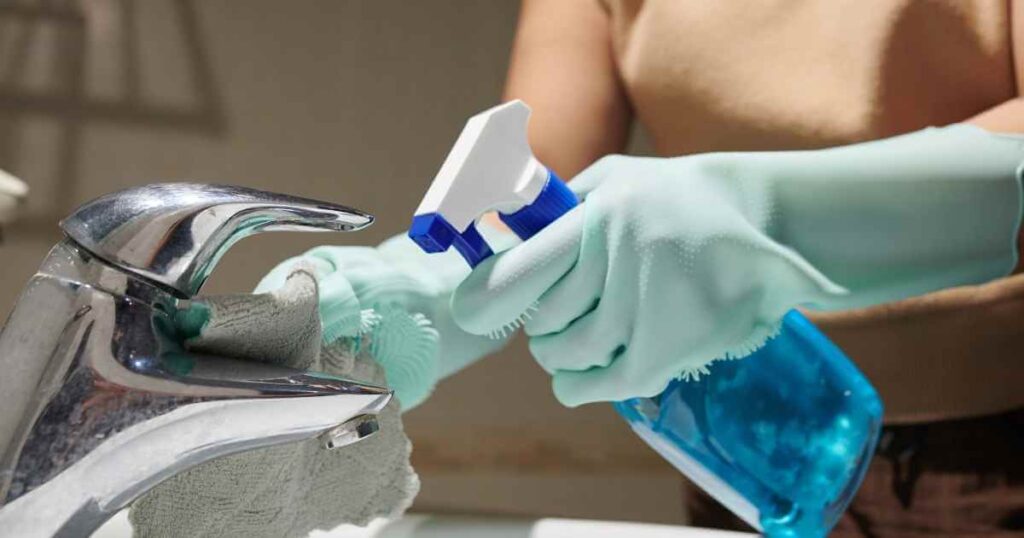
- Sinks and Faucets: Wrap a rag soaked in warm vinegar around the base of kitchen faucets where white crust accumulates. Let it rest for 20 minutes to soften the scale, then wipe clean.
- Coffee Makers and Kettles: Run a monthly cycle using equal parts filtered water and white vinegar through your appliances to clear internal heating elements, followed by two cycles of pure water to rinse.
For homes requiring a total baseline refresh before establishing a routine, scheduling a targeted deep cleaning service removes months of accumulated mineral scale and soap scum safely across all surfaces.
Long-Term Benefits of an Eco-Friendly Approach
Choosing natural methods to combat regional water hardness yields advantages that extend far beyond a sparkling bathroom mirror:
- Extended Surface Lifespan: Gentle, non-abrasive plant formulas preserve delicate tile sealers, stone counters, and custom plumbing finishes.
- Reduced Environmental Footprint: Biodegradable ingredients break down naturally in municipal water treatment facilities without depositing harmful salts or persistent chemicals into local rivers.
- Cost Efficiency: Highly concentrated green products and simple natural ingredients eliminate the need for expensive, specialized specialty chemical sprays.
- Healthier Living Space: Eliminating harsh synthetic fumes protects children, pets, and family members with respiratory sensitivities or allergies.
Maintaining a clean home in Greater St. Louis does not mean compromising on health or environmental values. By understanding how regional water hardness interacts with your fixtures and choosing gentle, science-backed eco-friendly solutions, you can keep every surface in your house shining brightly while protecting the local environment.
Dealing With Stubborn Hard Water Buildup in Your Home?
Tackling severe mineral scale and persistent soap scum takes time, patience, and the right approach. If you would rather hand off the heavy lifting to professionals who care about your indoor air quality and the planet, our team is here to help. Green Angel Cleaning brings detail-loving care to every home across Greater St. Louis, using eco-friendly formulas that leave your space fresh and spotless. Whether you need ongoing support through our recurring housekeeping services or help preparing for a fresh start with our move cleaning services, we make home care simple and stress-free. To discuss your home’s unique cleaning needs, connect with our team online or call us directly at (314) 712-1108 today.
